Stop letting the fear of asking for payment turn your expertise into unpaid work.
Become more comfortable moving from a helpful free conversation into an invitation to your paid coaching or consulting programme.
Comfortable getting paid is for coaches, consultants and experts with an existing high-ticket offer who keep giving away the help they intend to sell. Learn to recognise the transition, introduce your programme and let the person decide without continuing to coach for free.
- Short practical lesson
- Two separate audios
- Real conversation practice

How much did “happy to help” cost you last month?
A potential client describes a challenge. You ask good questions and begin helping. Before long, you are coaching them through the problem, sharing a plan and offering another free conversation.
The conversation ends with “That was really helpful.” But you never explained how they could work with you inside your paid programme.
For illustration: two free coaching conversations each week, lasting an hour each, take eight hours over four weeks. That is eight hours spent delivering help without making the paid invitation you intended to make.
Suppose your existing programme costs $3,000. Giving away another conversation does not mean you have lost a $3,000 sale. But when you never introduce the programme, the person never gets to consider that paid option.
The pattern can repeat: more free help, another follow-up with extra advice, then a calendar full of conversations that never reach a paid decision. Meanwhile, your time for serving paying clients and speaking with suitable prospects gets squeezed.
The person may have no idea you offer structured support. A clear invitation explains how they can continue working with you.
Practise the conversation before you need it.
You may already know that you should charge for your work. The difficult part is saying so when you imagine the other person feeling disappointed or deciding not to buy.
This programme combines practical wording with guided rehearsal, so you can prepare both what to say and how to respond to the discomfort that might otherwise make you retreat.
Understand the pattern
Spot the point where a reasonable request turns into work you intended to charge for. Decide what you will offer freely before the next request arrives.
Reinforce the principle
Revisit the principle that helping someone and charging fairly can belong in the same conversation. Use the bedtime audio as you wind down.
Rehearse your response
Mentally practise introducing your programme, explaining the investment and listening to the response without automatically offering more free coaching.
Go into the next conversation with a boundary, a sentence and a plan.
For example: “What you’ve described is something we could work on properly inside my programme. Would you like me to explain what that involves?”
That gives a suitable prospect the opportunity to consider paid support. They remain free to say no.
Notice the request
Recognise when an introductory conversation is turning into the coaching or consulting you deliver inside your programme.
Introduce your programme
Prepare a natural invitation to hear about your existing programme, what it includes and the investment.
Complete the invitation
Practise explaining the paid option without retreating into “Let’s just have another free chat.”
Allow a choice
Give the person room to accept, ask a question or decline. A pause does not have to become an offer of more free work.
Practise one change
Apply the lesson to one real request, then review your response. Build your practice around situations your business actually presents.
The next “quick favour” is worth preparing for.
Everything you need to prepare your next payment conversation
1
Start here and self-assessment
Spot where you stay in free-help mode: giving another solution, postponing the invitation or offering another unpaid call. Choose one conversation to practise. Check your understanding with the scenario quiz.
2
The seven-minute video lesson
Where free help ends and paid work begins. Learn how to recognise the transition from being helpful to taking on paid work, and decide how to explain it. A focused seven-minute lesson you can put to use without working through a long business course.
3
Bedtime lesson audio
Getting paid is part of helping. Revisit the lesson in a gentler format as you wind down. Reinforce the idea that a clear paid agreement can support a useful working relationship.
4
Guided hypnosis and visualisation
Comfortable asking to be paid. Guided hypnosis and visualisation to rehearse a payment conversation and explore the discomfort around it. Practise imagining a calm response before the real situation arrives.
5
The payment conversation phrasebook
Use practical language for moving from exploring someone’s challenge to inviting them into your existing paid programme. Adapt the examples so the invitation sounds natural in your voice.
6
Workbook and seven-day practice
Write down what you choose to give freely, where paid work begins and the response you want to practise. Use the seven-day plan to take that preparation into real conversations and reflect on what happened.
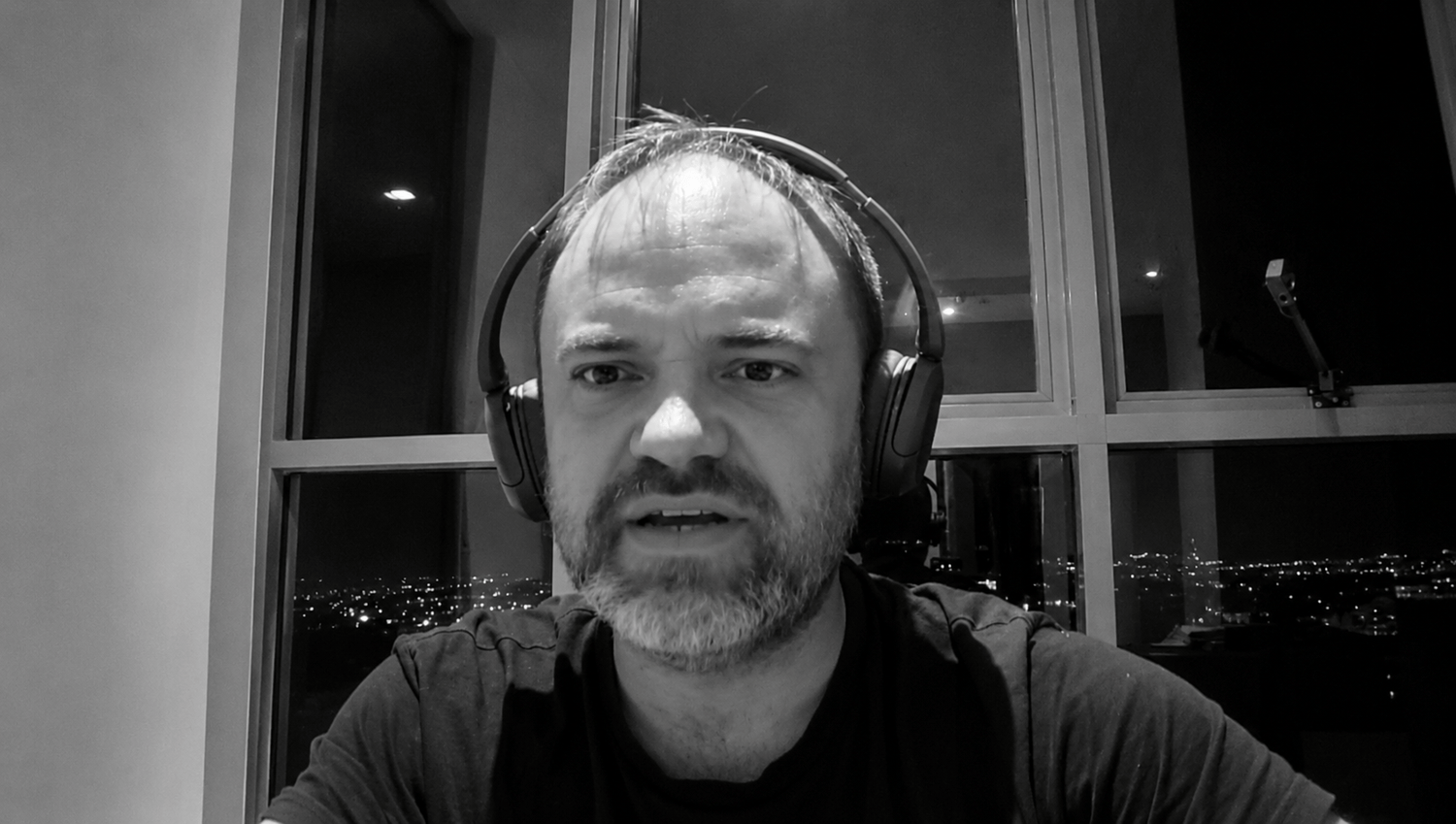
Meet your coach, Matt Jope
I have been a full-time online coach since 2018. My background includes law, university teaching and senior sales and marketing leadership.
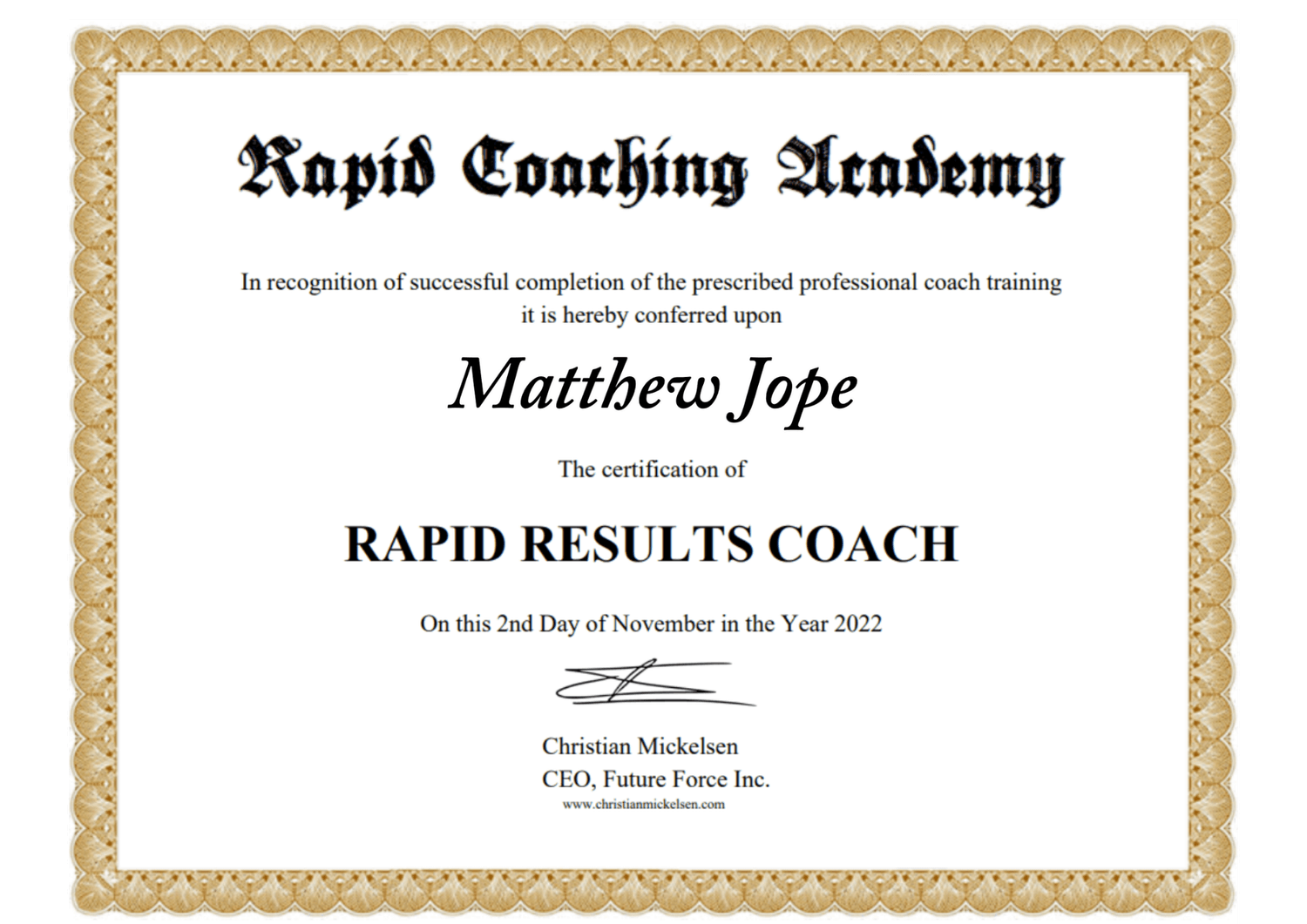
As a certified Rapid Results Coach, I am interested in what happens when someone understands an idea but finds the real conversation harder.
This programme brings practical language together with guided mental rehearsal. The aim is to help you prepare a response you can actually practise in your business.

Comfortable getting paid
$67 USD. One payment. No subscription.
The focused video lesson, separate bedtime lesson and hypnosis recording, self-assessment, scenario quiz, conversation phrasebook, workbook and seven-day practice.
Think about your last few free conversations. Did a suitable prospect hear about your paid programme, or did you keep providing help without making the invitation?
This $67 programme helps you prepare and practise that transition. Bring an existing offer: the focus is moving from free help into paid work, rather than creating an offer or increasing your prices.
Short practical video lesson
Two distinct guided audios
Reflection and scenario quiz
Phrasebook, workbook and practice
A practical programme with a clear purpose
Work on how you respond to requests for unpaid work. Your progress depends on your situation and practice. This programme does not promise sales, increased income or a particular psychological result.
Before you begin
The focus is clear, respectful communication. You explain the offer and fee, then allow the other person to decide.
No. Choose what you give freely and recognise when a request moves beyond that choice.
You can practise a clear response while feeling some discomfort. Begin with a manageable conversation and review what happened.
Watch the lesson while awake. The separate bedtime audio revisits the principle as you wind down. There is no promise that you will absorb new business knowledge while asleep.
Listen in a safe, quiet place where you can rest undisturbed. Never use it while driving or operating machinery. You remain free to stop whenever you wish.
No income result is promised. The programme helps you prepare clearer payment conversations. Pricing, demand, selling skills and delivery still matter.
Another month of the same pattern still takes your time.
Think of a recent free conversation that became a coaching session. Where could you have explained how to continue inside your paid programme?
Start there. Prepare your invitation, rehearse saying it and use it when there is a genuine fit. Another free call can wait while you make the paid option clear.
Matthew Jope ©2026 - All Rights Reserved
Educational coaching content. Hypnosis and visualisation are optional practice tools, not medical treatment. Individual experiences vary.